 English
Australia endorses national standards for recognising assistance animals
The principles call for a recognised national ID card and common public access test standards. Queensland will help draw up the rollout plan.
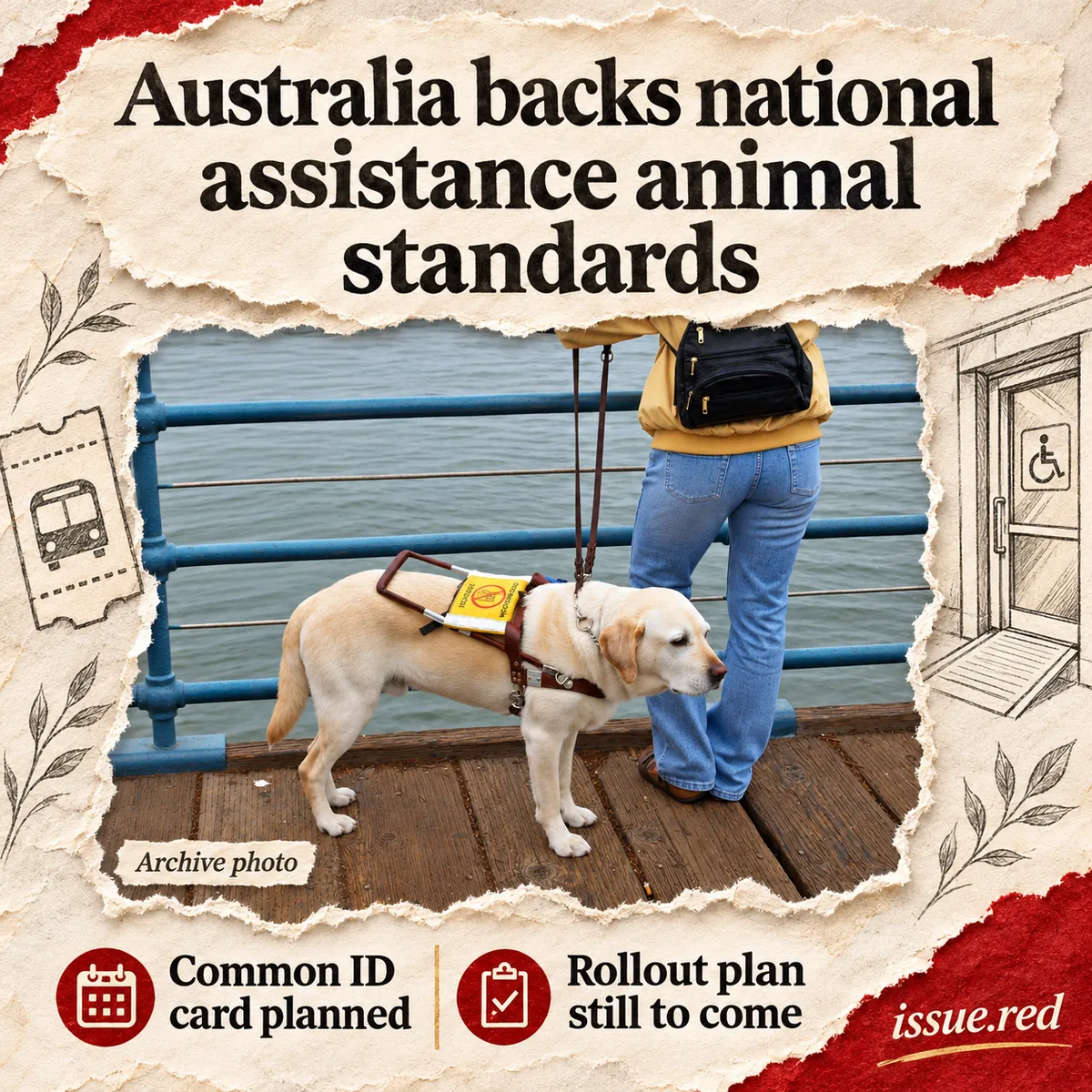

Australia’s federal, state and territory governments have endorsed national principles to make it easier for people with assistance animals to use transport and enter public venues across state borders. The framework calls for a nationally recognised ID card and logo, along with common standards for public access tests.
Assistance animal handlers currently face different ways of proving that their animals qualify, depending on where they live or travel. The federal health department says the principles aim to make that evidence more consistent for handlers and easier for businesses to recognise. The framework also covers trainer accreditation and animal welfare from training through retirement.
The federal announcement on 25 November did not set a start date for the card or the testing standards. Queensland and the Commonwealth will lead work on a rollout plan, and implementation will be up to the states and territories. The department says some jurisdictions may need longer to make the changes.
The Disability Discrimination Act 1992 already protects the right to have an assistance animal. In the government’s 2025 consultation, which received 376 submissions, respondents raised practical concerns about the cost of accreditation, access to testing in remote areas and the privacy of information on a national card.
Sources
- National Principles for the Regulation of Assistance Animals — Department of Health, Disability and Ageing
- Announcement on national assistance animal principles — Minister for the National Disability Insurance Scheme
- Assistance animal principles consultation report — Department of Health, Disability and Ageing
- Assigned writer
- Olivia BrownCredit pending confirmation
- Assigned reviewer
- Harry WilsonReview pending